Solo vs Group Hiking on the Wild Coast: An Honest Guide
Hike South Africa's Wild Coast alone or join a guided group? What independent hiking really involves, and what it's like to join a small group on your own.
 Allan Hein17 October 2026
People ask me this more than almost anything else, usually someone overseas who has never seen this coast: should I do the Wild Coast on my own, or join a group?
It's a fair question, and it's really two. Do you need a guide at all? And if you're travelling alone, what's it like to turn up by yourself and spend three days walking with strangers? I'll answer both as straight as I can. Sometimes going it alone is the right call, and I'll tell you when.
Table of Contents
The Short Answer
If you've done a fair bit of remote, multi-day hiking, you can read tides and rivers, and you don't mind finding your own beds and food in places with no signal and no card machine, then yes, you can walk parts of the Wild Coast on your own.
If any of that makes you hesitate, or it's your first trip to South Africa, join a small guided group.
And if you're travelling alone, a group is by far the easiest way to do it. You arrive on your own, and three days later you're swapping numbers with everyone you walked with.
Can you hike the Wild Coast on your own?
You can, but don't expect it to feel like other self-guided hikes you've done. There's no national park here. No marked trail, no huts to book, no ranger station. People live along this coast, and the paths are the ones they use to get to the shop, the school and the river. Nobody has painted arrows on them.
The Wild Coast Meander and the Pondoland Trail are both walked independently, and I've written about them in the best multi-day hiking trails on the Wild Coast.
If you go on your own, this is what you're taking on:
- Rivers and tides. After rain inland a river can come up fast, and some crossings are only safe at certain stages of the tide. It's the biggest risk on this coast, full stop.
- Finding the way. A lot of sections have no markers at all, and the path you want looks exactly like the five cattle tracks next to it.
- No signal, no ATMs. Once you're past Port Edward, assume there's no cash machine, no card machine, and signal only now and then. Our guide to currency, SIM cards and connectivity covers what to sort out before you leave.
- Beds and food. Places to stay are spread out and often can't be booked online. There's hardly a shop along the way, so you carry what you eat.
- Help is far away. The nearest hospital is about 90 minutes by road, and that's from the spots a road actually reaches.
I'm not trying to put anyone off. For the right person, walking this coast alone is wonderful. But it takes a lot of planning, and there isn't much room for mistakes.
My advice is always the same: do it once with someone who knows the coast, then come back and explore on your own. There's more on the safety side in is the Wild Coast safe for tourists?
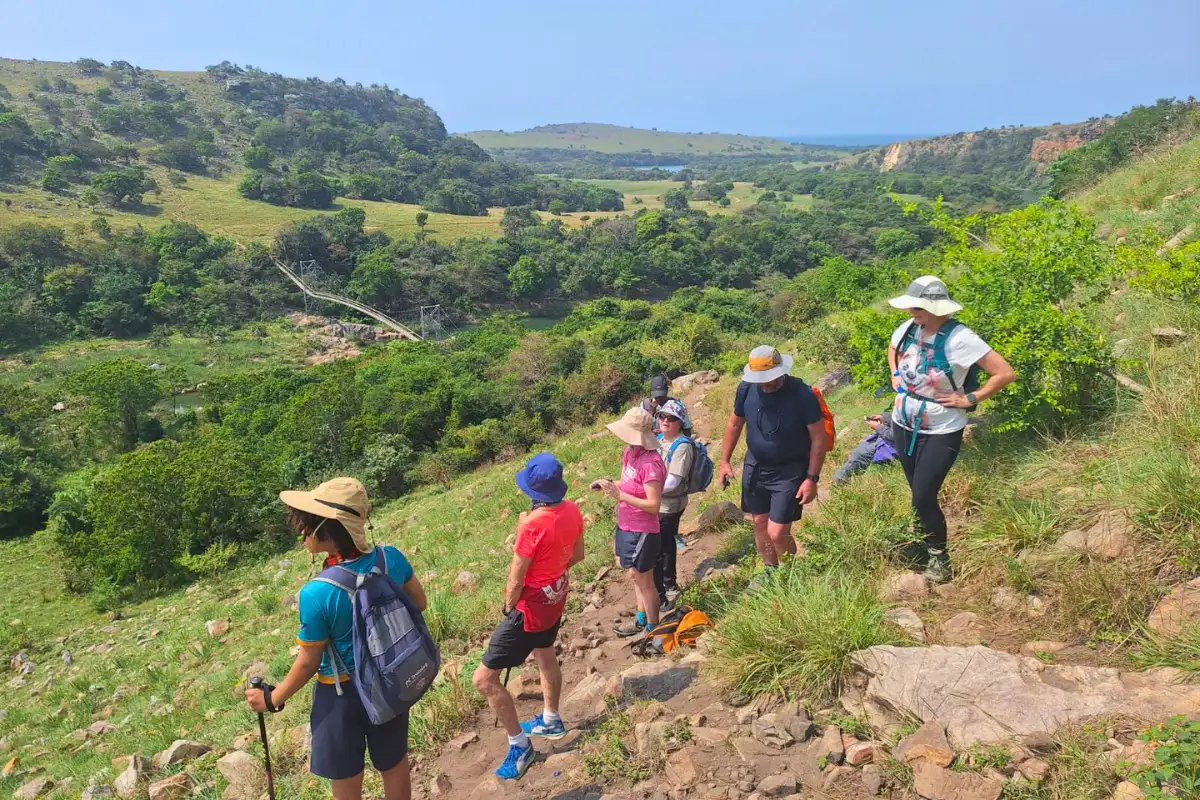
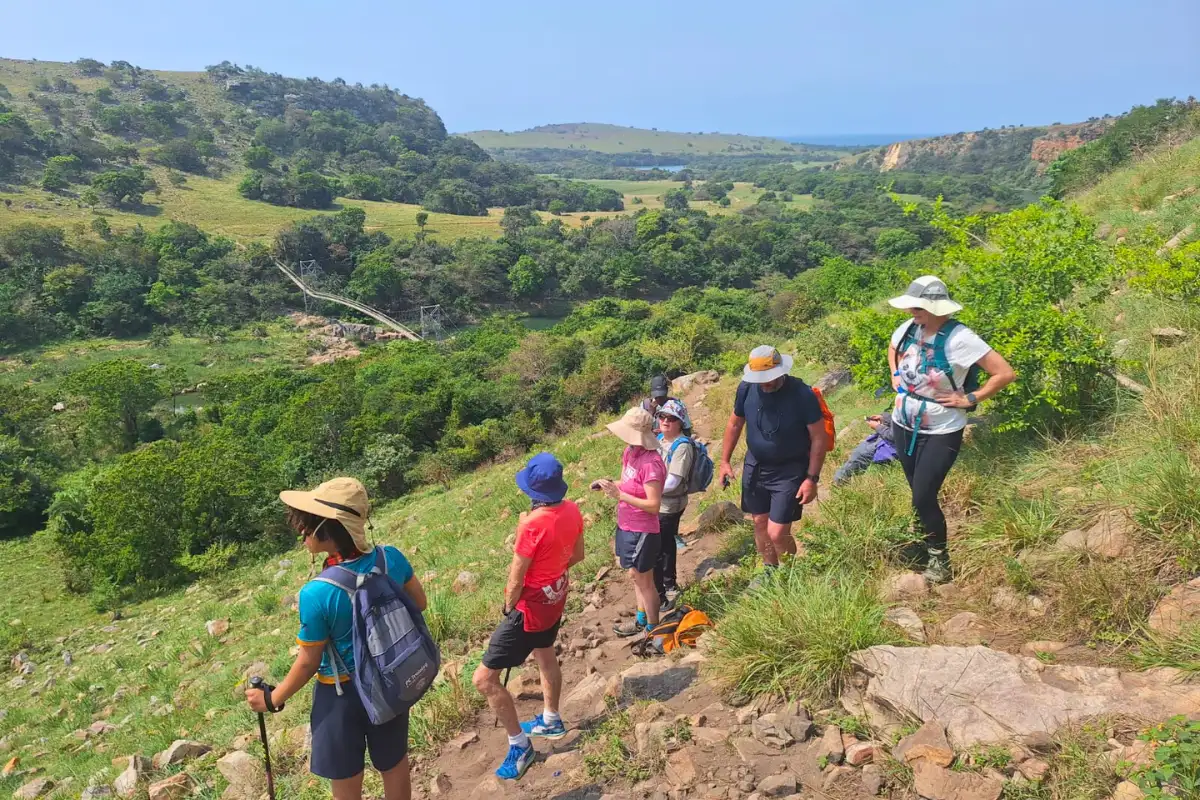
Mtentu Ramble hikers pausing on a rocky path above a green valley, with the Mzamba suspension bridge visible below, Wild Coast, South Africa
What a guided group actually gives you
Most people picture a guide as someone who walks in front and shows you the way. Out here, that's the least of it.
They read the coast. Our guides grew up here. They know which crossing is safe today, which beach has a rip, and when the weather coming in off the sea means it's time to get moving. On Day 1 the guide decides whether we take the shoreline past the Mzamba fossils or go over the suspension bridge, and that comes down to the tide that morning. On your own, that call is yours to get right.
The logistics are done. Three nights' accommodation, every meal, permits, the ferry crossings and your transfer back on Day 4 are all sorted before you get here. If you take the optional luggage transfer, your main bag goes round by road to the Hiking Shack and you walk with a daypack.
You get let in. The first night you stay with a family in a Pondoland homestead. You won't find it on any booking site. It comes from years of living alongside the families here. We've called Mtentu home for more than a decade. The guides translate, explain things, and introduce you to the people you pass on the trail. No map does that.
There's a plan if something goes wrong. If someone turns an ankle or feels ill, there are people to call, and the guide knows exactly where the nearest road is.
And there's company. For people travelling alone, that's usually the part they're most nervous about.
What is it like to join a group as a solo traveller?
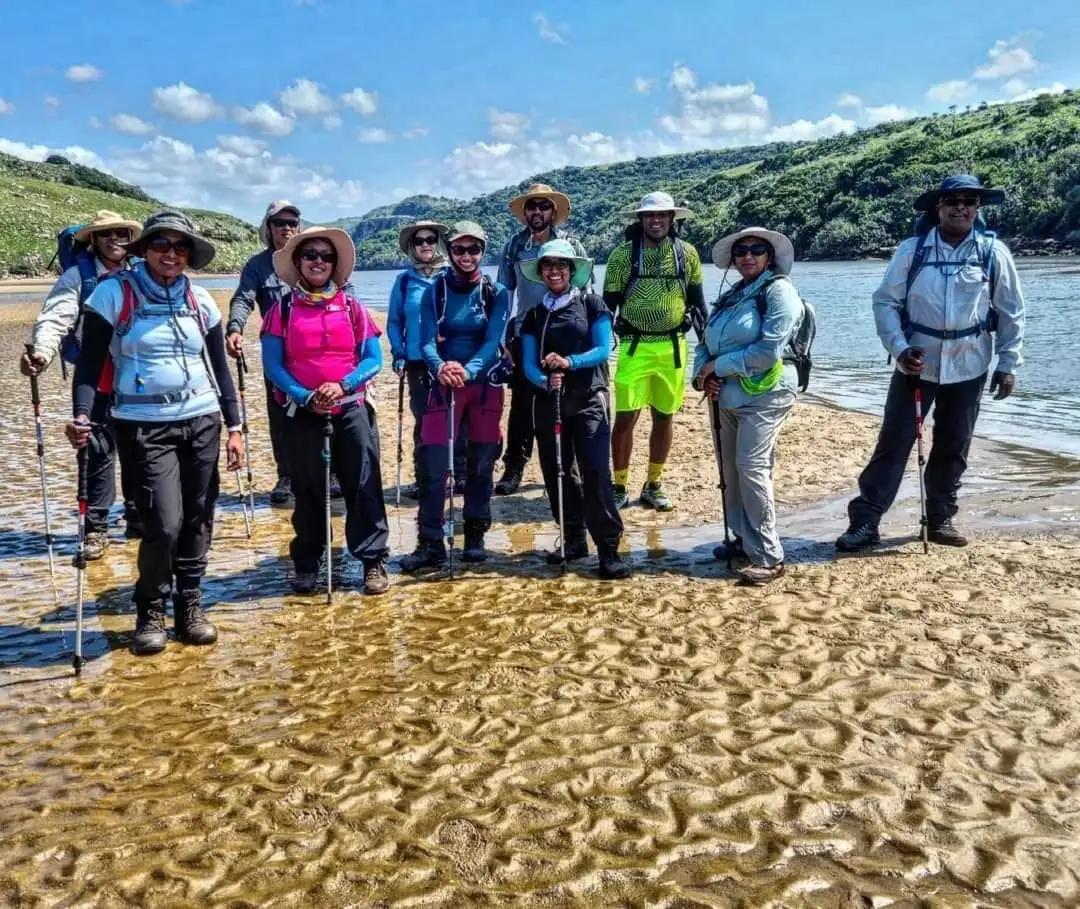
A lot of our hikers come on their own, and I think it's one of the best ways to do this walk. Our open departures get booked by single travellers, couples and a few friends together, so on any date you'll be walking with a mix of people. Never more than 12.
What to expect:
- You won't stick out. Everyone meets at the Wild Coast Sun on the first morning. By lunch on Day 1, people have usually found someone to talk to.
- Meals are together. Dinner at the homestead and the evenings at the Hiking Shack are shared, and that's where most of the friendships start.
- You can still have time alone. A group spreads out once it's walking. If you want an hour with your own thoughts on an empty beach, nobody minds.
- Nobody gets left behind. The guide sets a pace the group can manage and knows everyone's name by Day 2. If you're faster or slower than the rest, it's handled quietly. Worried about your fitness? Have a look at is the Mtentu Ramble suitable for beginners?
Where you sleep. Night 1 is in a traditional rondavel at the homestead. Nights 2 and 3 are at the Hiking Shack, which is dorm-style: single beds, a shared room and proper bedding. It's comfortable and friendly, but it isn't private. Light sleepers, bring earplugs.
Women travelling alone often ask about safety, so there's a section just for that in our Wild Coast safety guide.
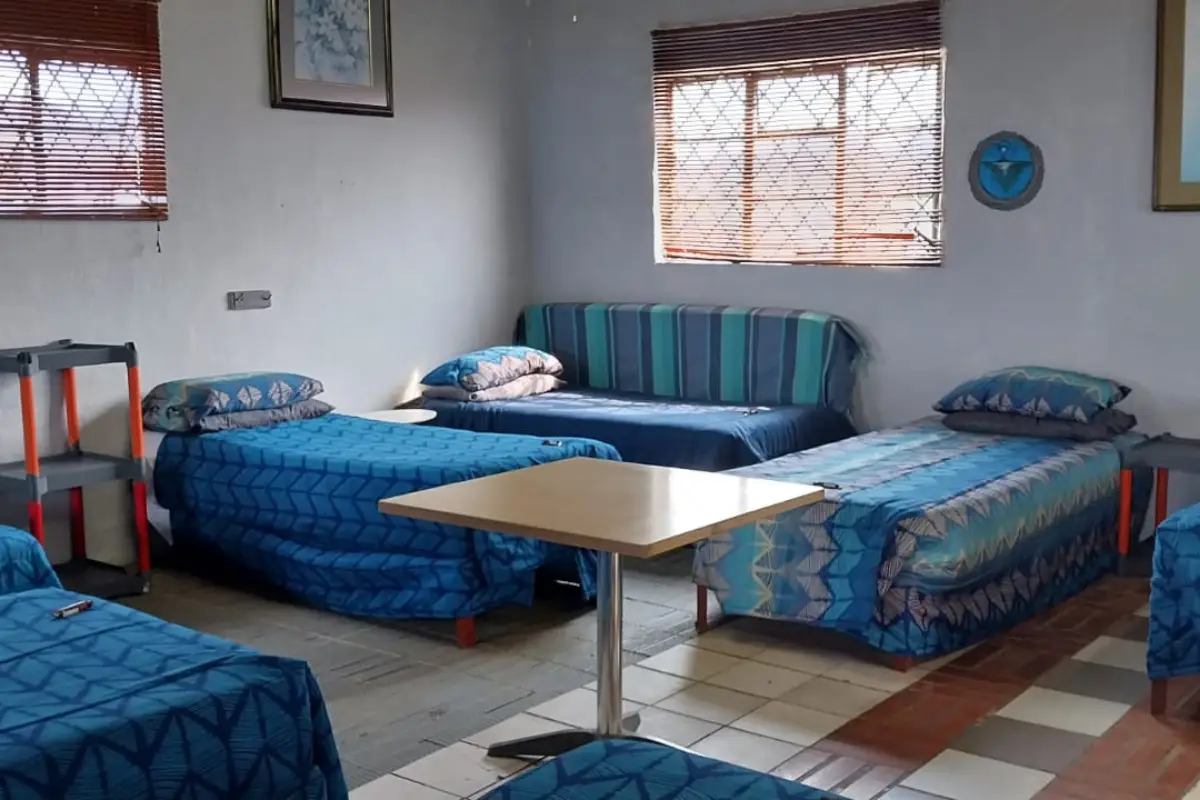
Clean dormitory room at the Hiking Shack on the Wild Coast with single beds made up in blue linen
Do solo travellers pay more?
No. You pay per person: R4,700 for 2026 departures and R5,200 for 2027, whether you book one place or six. That covers your guide, three nights' accommodation, all your meals, permits, the ferry and the transfer back. The full breakdown, extras included, is in how much does the Mtentu Ramble cost?
And don't assume going independent works out cheaper. Add up beds along the way, the food you carry in, getting back to your car, and the extra night or two when a river is too high to cross. It often doesn't.
Bringing your own group
Coming with friends, family or a walking club? Book your places on an open departure and you'll walk with whoever else has booked that date.
Some of my favourite trips have been just that. Gill Tregenna and her tannies, aged 76 to 83, booked together and kept up every step of the way.
If there are enough of you to fill most of a departure, get in touch before you book and we'll work out dates together. One thing to remember if you want porters: each person needs their own. One porter carries for one hiker.
Solo or group: how to decide
Hiking on your own suits you if:
- You've done multi-day, self-supported hikes in remote places before
- You're comfortable reading tides, judging river crossings and finding your way without markers
- You don't mind carrying your food and finding beds you can't book online
- You've got spare days in case the weather holds you up
A guided group suits you if:
- It's your first time on the Wild Coast, or in South Africa
- You're travelling alone and would like company without having to arrange it
- You'd rather put your energy into the walking than the planning
- You want the homestay, the local knowledge and the stories, not just the views
- You're flying in with fixed dates and can't afford for things to go wrong
Still working out which part of the coast to visit? Start with our complete guide to the Wild Coast.
FAQs
Will I be the only person travelling alone?
Probably not. Solo hikers book our open departures all the time, alongside couples and friends, so there's nearly always someone else who came on their own.
Can I share with my partner or friend?
Yes, you'll be on the same departure and walk together. Nights 2 and 3 are in the shared dorm at the Hiking Shack, though, so it's a communal set-up rather than a private room.
What if I'm slower than the rest of the group?
The guide sets a pace the whole group can manage, and there are rest stops every day. If you're struggling on a stretch, the guide will notice and slow things down.
Can I hike the Mtentu Ramble route without a guide?
No. The Mtentu Ramble is a guided hike. The homestay, ferry crossings, meals and beds are all arranged through us and the community, so it can't be booked as a self-guided route.
How big are the groups?
12 hikers at most.
---
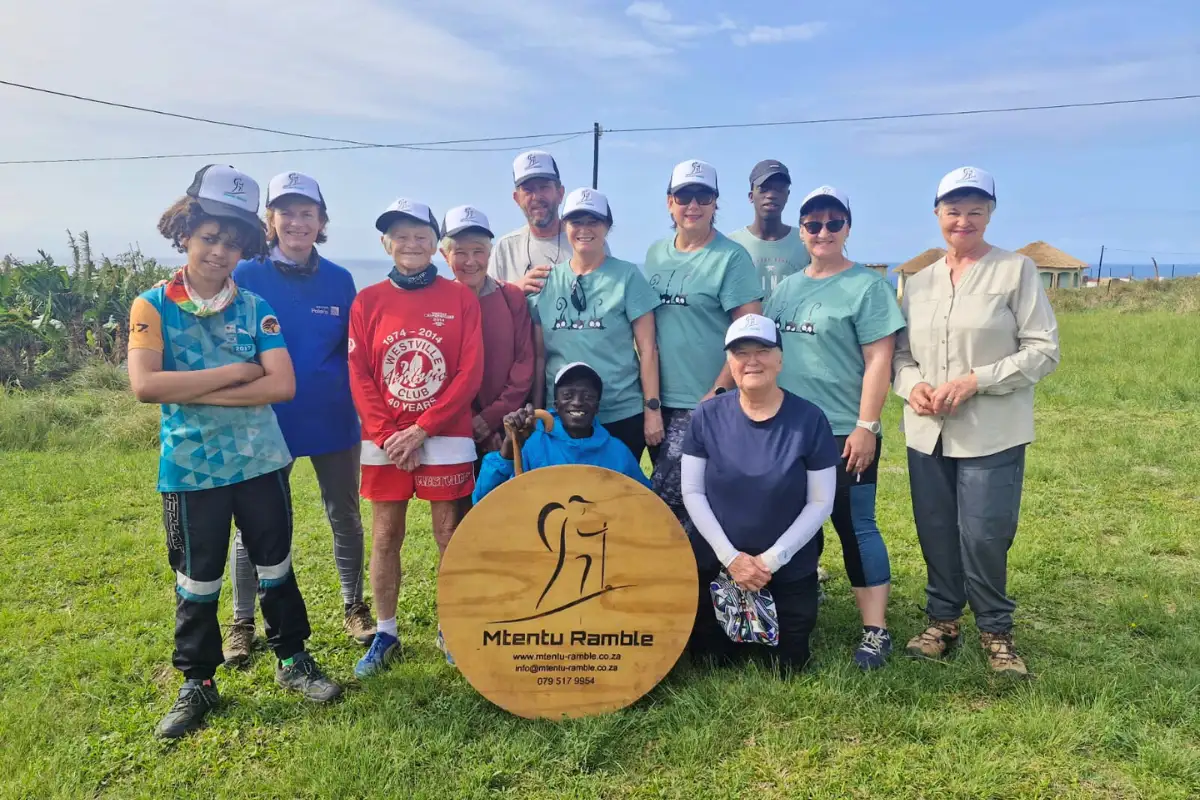
Mtentu Ramble hiking group of mixed ages in matching caps gathered around the wooden Mtentu Ramble sign on a grassy hilltop, Wild Coast, South Africa
Come on your own or bring your people. Either way, you'll be walking with someone who knows this coast. Bookings for the next departures are open now.
Ready to Experience This Yourself?
The Wild Coast is waiting. Book your guided hike with Mtentu Ramble and create memories that will last a lifetime.