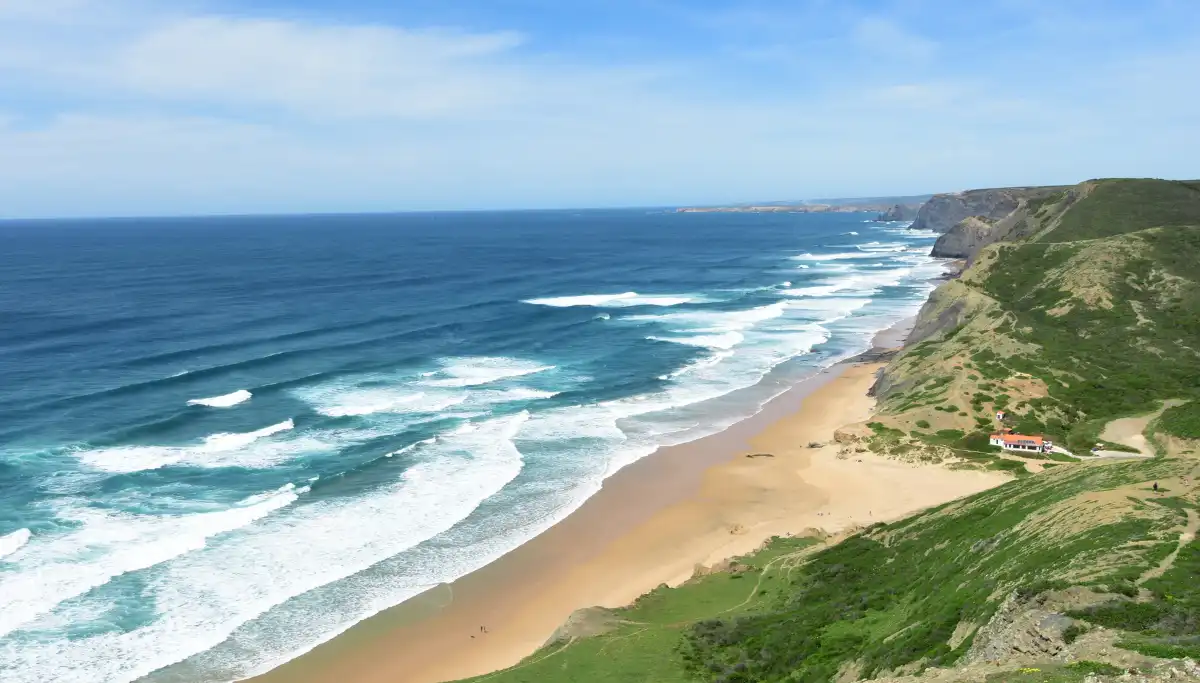
The Sardine Run on the Wild Coast: When, Where & What to Expect Near Mtentu
Every June, millions of sardines migrate along South Africa's Wild Coast. How the 2026 season went, when to plan for 2027, and what it looks like from Mtentu.
 Allan Hein26 July 2026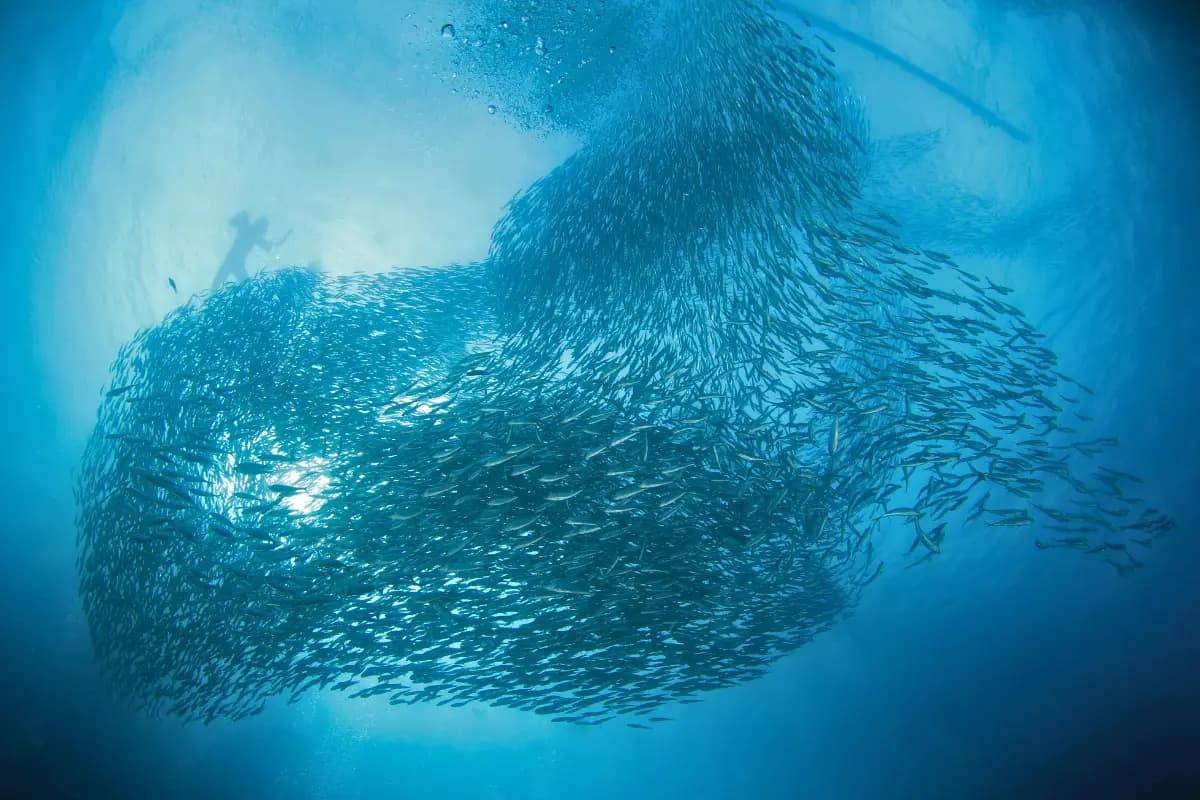
If you’ve never stood on the edge of the Wild Coast when the sea itself turns silver, then my friend, you’ve missed one of nature’s grandest marine migrations of the South African pilchards' annual run. Every winter, like clockwork and chaos rolled into one, the sardines migrate, millions upon millions of tiny fish shimmering northward in a rolling mass so thick it looks like the ocean’s swallowed a mirror.
I’ve lived here in Mtentu for more than a decade now, long enough to know that when the sea starts to boil in the distance and the gannets dive like arrows from heaven, until they are so bloated, they find it difficult to fly. Then it’s time to head down to the beach, to watch a never-ending story. The sardine run has reached our neck of the woods.
Updated July 2026 with how this year's run actually played out, and what it means for planning 2027.
Table of Contents
- A Sea That Moves Like a Living Thing
- Sardine Fever: Mtentu Style
- Why the Sardine Run is So Special
- How the 2026 Sardine Run Went
- When is the sardine run?
- When is the 2027 sardine run?
- What animals follow the sardine run?
- Where to Stay for the Sardine Run
- GweGwe Beach Lodge: Barefoot Luxury Meets Wild Coast Adventure
- Mdumbi: Rustic Charm and Raw Ocean Energy
- Closer to Home: Mtentu’s Wild Heart
- Tips for Experiencing the Sardine Run
- Reflections from the Shore
- FAQs
A Sea That Moves Like a Living Thing
It’s hard to describe the sight unless you’ve seen it. From a vantage point at Mtentu, you can watch as the water darkens into shadowy clouds, constantly shifting, alive. Then suddenly-whoosh!-a bait ball breaks the surface, and the whole world erupts. Dolphins slice through the surf in silver arcs. Sharks turn in slow circles just beneath the foam. Whales abound.
Cape gannets plummet like feathered torpedoes, hitting the water with the confidence of creatures that have done this a thousand times before, convincing watchers that they can not recover from such an impact with the water. Hitting the water at high speed ensures they carry down into the sardine ball for their chosen meal.
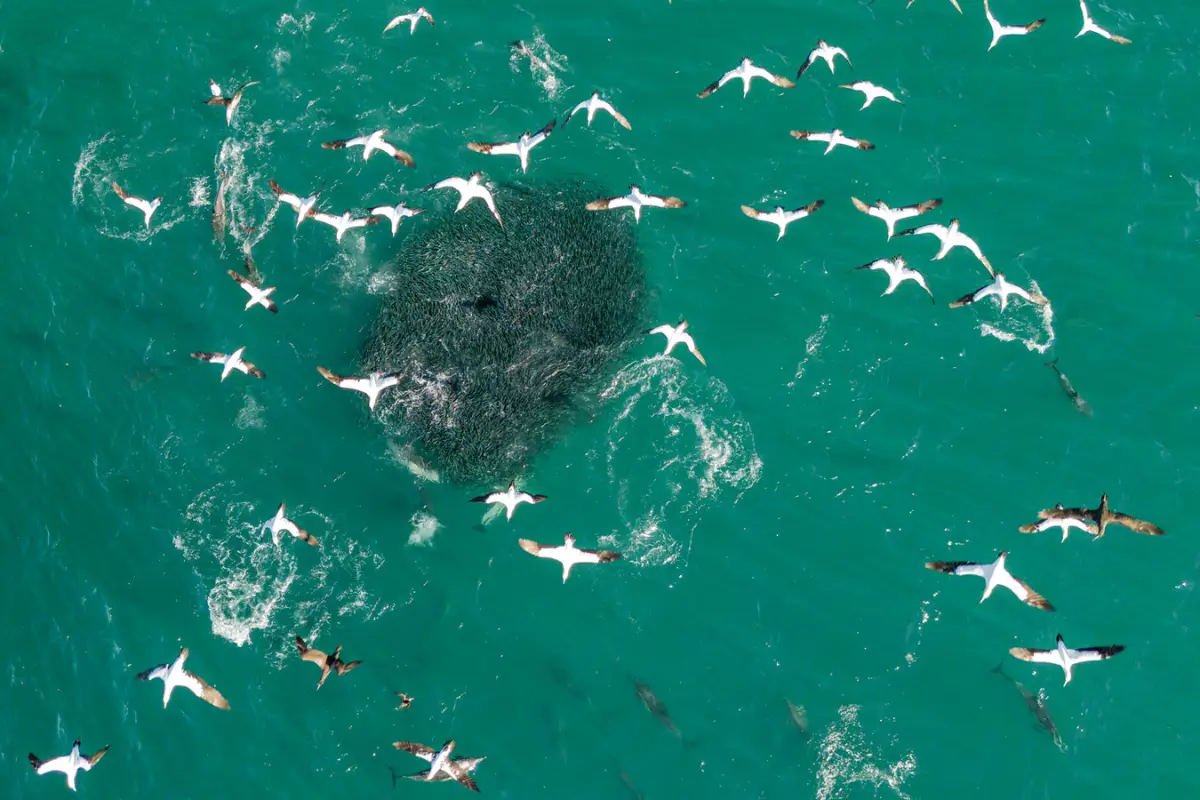
Aerial view of gannets and dolphins attacking a sardine bait ball in green Indian Ocean water off South Africa
The air smells of salt, adrenaline, and fish oil. You can hear the ocean breathing heavier than usual, cradling this massive shoal of fish, but more than that, the sardines are the horse divorce (hors d'oeuvres), main meal, and dessert, better than Gordon Ramsey's Michelin Star Kitchen could produce for the rest of the ocean predators.
Among those booked in by the maitre d’hotel for a massive feeding frenzy are marine mammals. Dolphins, common and bottlenose dolphins, work together to herd sardines. Whales, Bryde’s, humpback, and minke whales. Various species of sharks, such as great white, bronze whaler, dusky sharks, oceanic whitetip, and mako. Large game fish like yellowfin tuna, king mackerel, garrick, and shad. Seabirds, including gannets, cormorants, and gulls, also dive from above to catch the sardines as they are herded to the surface.
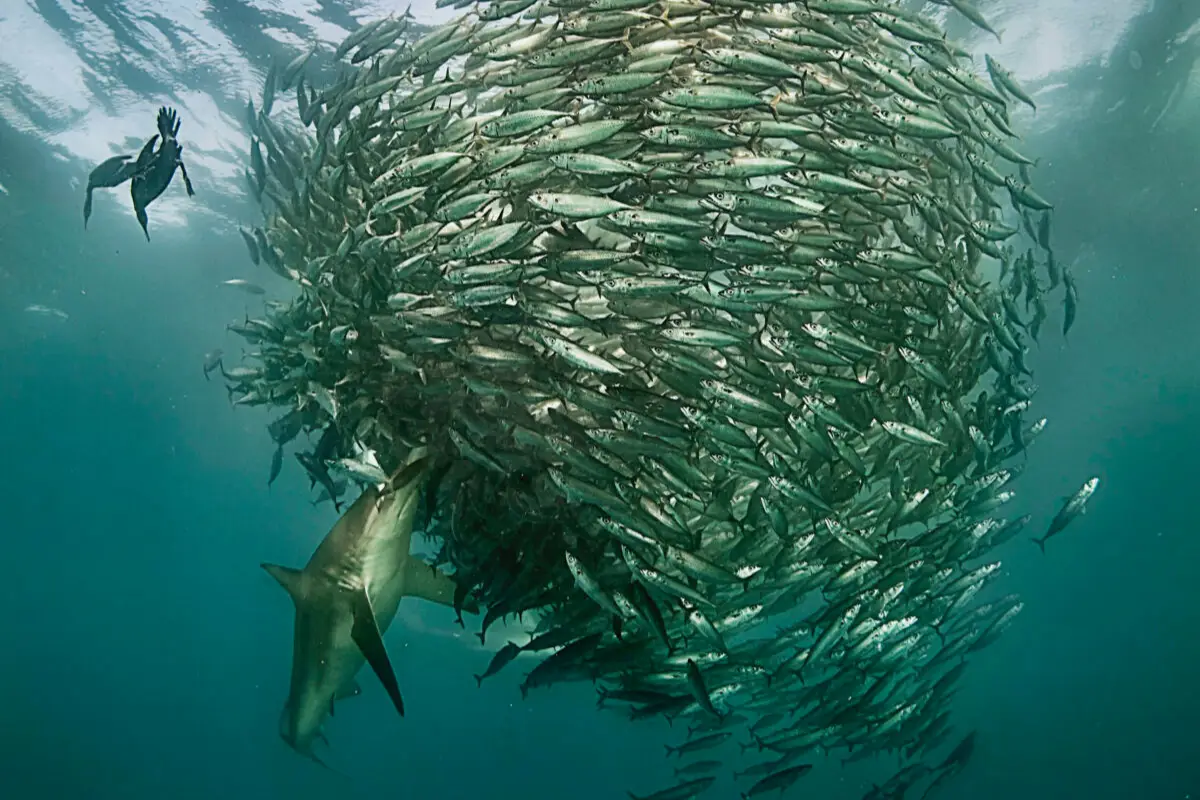
Underwater shot of a shark slicing through a sardine bait ball with a diver above, Wild Coast South Africa sardine run
And if you’re lucky, a tongue of cold water pierces the warm Indian Ocean, which brings the sardines closer to the shore. Sardine Fever has enthralled the watchers. It is quite unbelievable as it seems like the "Big Five" of the ocean are on display at once, devouring very small prey. A scene of biblical proportions, as many predators are sated by a never-ending supply of sardines, I have never tired of watching this amazing spectacle; nature truly is wonderful.
Sardine Fever: Mtentu Style
This year, my granddaughter Amelia (five going on six) saw her first sardine run from Skate Bay, just below our house. She stood there wide-eyed, clutching a plastic bucket half her size, and announced, “Gumpa, I’m going fishing!” She waded in up to her knees before realizing the sea wasn’t giving up its treasures quite so easily. Still, she came home with no sardines, a handful of seaweed, and a story that grew with every telling.
That’s the thing about the sardine run: it turns everyone, from old locals to visiting tourists, into wide-eyed children again. There’s something almost spiritual about seeing so much life in one place, all at once, knowing it’s been happening long before we ever arrived here, and will, hopefully, long after we’re gone.
Why the Sardine Run is So Special
For those new to this phenomenon, the sardine run happens between June and July, when billions of sardines migrate northward from the cold waters of the Cape toward KwaZulu-Natal. They follow a current of cooler water that sometimes brushes close to the coast, bringing with it a floating festival of predators: dolphins, sharks, whales, and seabirds, all chasing the same silvery prize.
It’s been called “the Greatest Shoal on Earth” and has featured in BBC’s Blue Planet II, and for good reason. It’s one of the few natural events on Earth that can rival the great wildebeest migration in East Africa for sheer spectacle.
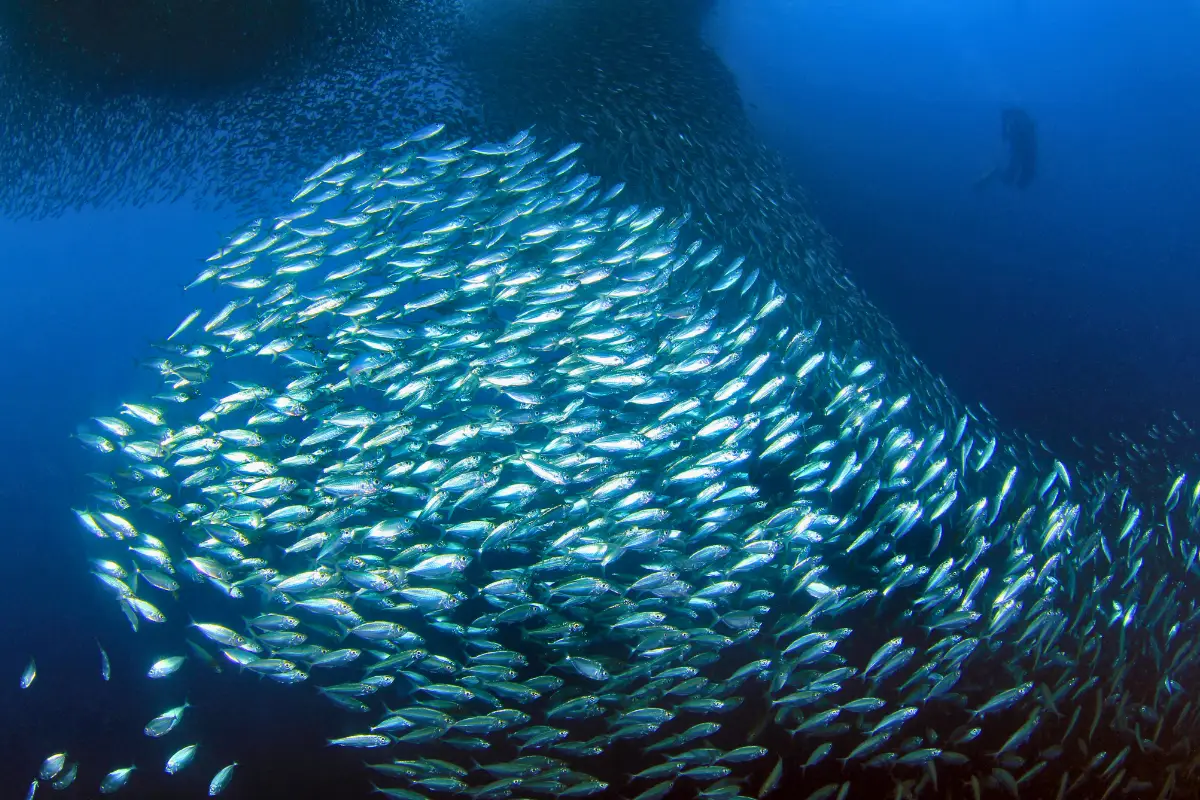
Enormous sardine bait ball underwater during the Wild Coast sardine run, diver silhouette visible above in deep blue water
And here on the Wild Coast, you can witness it from the land, from a boat, or if you’re particularly brave, from under the water itself. I myself would definitely not put a toe in the water during this time. Maybe one of the sharks would prefer a bite of something larger?
How the 2026 Sardine Run Went
This is the section I'll keep rewriting every winter, because no two runs are the same and I'd rather tell you what actually happened than repeat the brochure version.
The 2026 run arrived more or less on cue. The first shoals were netted at Port Edward on 13 June, which is our own doorstep, and that early Port Edward catch is usually the signal that things are properly underway along this stretch of coast.
What followed was a scrappier season than some. Strong winds and rough currents made netting hard work for weeks, and the KZN South Coast netters spent a good deal of June waiting on the weather rather than hauling fish. Anyone who came expecting a guaranteed spectacle on a given weekend will have been frustrated.
But underneath the difficult conditions, the biology was there. Large concentrations of baitfish stayed present along the South Coast through the season, mixed shoals of red-eyes, mackerel and sardines together, and there were repeated reports of substantial shoals along the Wild Coast itself. Plenty of fish also held south of KwaZulu-Natal, ready to push north whenever the water and wind allowed.
The lesson, which is the same lesson every year: this is a wild animal migration, not a scheduled event. Come for a week, not a weekend, and treat every day the sea behaves as a gift rather than an entitlement.
When is the sardine run?
The season runs roughly 10 June to 10 August, and it peaks from mid-June to the end of July. If you can only come once, come inside that peak.
Nobody can give you an exact date, and you should be suspicious of anyone who does. The run is driven by water temperature and currents, not a calendar, so it shifts by a week or two either way each year. What has held reliably for decades is the window itself.
- The season: roughly 10 June to 10 August. Operators build their calendars around this, and 2026 fitted it neatly.
- The peak: mid-June to the end of July.
- How long to allow: at least five to seven days. Weather, not fish, is what usually costs people their sighting.
- When to book: by roughly October or November for the following winter. The good boat-based operators and the lodges that run sardine packages fill up early, and there simply aren't many beds on this coast.
When is the 2027 sardine run?
Plan for mid-June to late July 2027, and treat anything outside 10 June to 10 August as a long shot.
Get your accommodation and any boat charter settled before the end of 2026, because the handful of operators who do this properly are booked months ahead. Miss it and the next chance is winter 2028.
What animals follow the sardine run?
Almost every large predator on this coast, all at once. That is the actual spectacle: the sardines are the reason, but they are not what you come to watch.
- Dolphins — common and bottlenose, working in coordinated groups to herd the sardines into bait balls
- Whales — Bryde's, humpback and minke
- Sharks — great white, bronze whaler, dusky, oceanic whitetip and mako
- Game fish — yellowfin tuna, king mackerel, and the garrick and shad that draw anglers to this coast
- Seabirds — Cape gannets above all, plus cormorants and gulls, diving from height into the shoals
The dolphins do most of the work. They drive the sardines up against the surface into a tight ball, at which point everything else arrives to take advantage of it, and the sea goes from empty to chaotic in under a minute.
Where to Stay for the Sardine Run
Now, let’s be practical. If you are eager to come and witness this marvel, you’ll need a good base, somewhere that puts you close to the action but still lets you sleep off a day’s adventure in comfort (or at least with sand-free sheets).
A word to the wise. I would strongly recommend you book now for next winter's sardine run. Remember, this is a yearly spectacle only. Miss 2027 and one must wait for 2028. The old adage applies. You snooze, you lose. Do not miss out. Seize the moment. Spots vanish faster than a leopard in flight.
GweGwe Beach Lodge: Barefoot Luxury Meets Wild Coast Adventure
If you fancy yourself an adventurer with a taste for luxury, GweGwe Beach Lodge inside Mkambati Nature Reserve is hard to beat. Their all-inclusive fly-in ocean safaris take all the stress out of planning, they’ll fetch you from Durban, feed you like royalty, and get you out on the water with expert marine guides.
You’ll spend your mornings chasing the sardine run, freediving or snorkeling among dolphins, whales, and sharks, and your afternoons sipping something cold with your toes in the sand. Evenings are for fireside stories and hearty food.
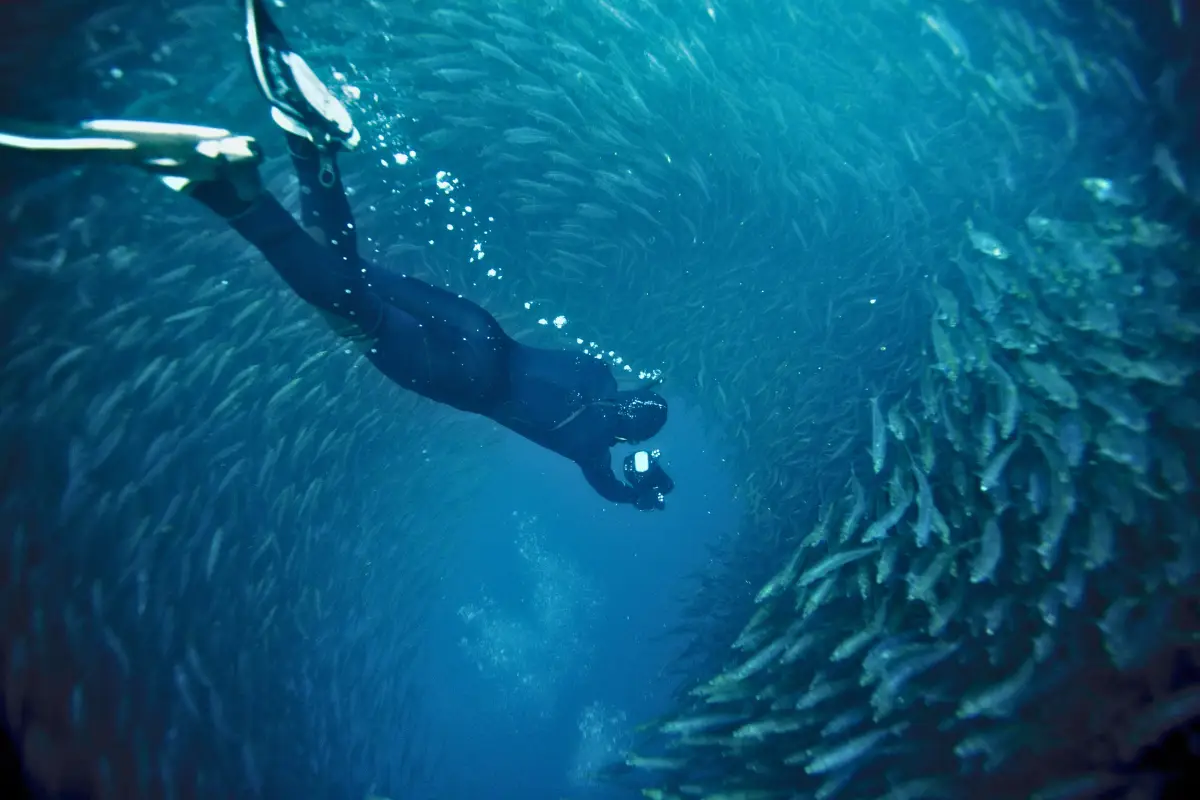
Freediver plunging into a tightly packed sardine bait ball during the Wild Coast sardine run, Eastern Cape South Africa
It’s not cheap (packages start around USD 7,500-12,000 per person), but as anyone who’s done it will tell you, it’s a once-in-a-lifetime experience. And frankly, when you’re bobbing in the ocean surrounded by a living tornado of fish, birds, whales and dolphins, you’ll forget all about the price tag.
Mdumbi: Rustic Charm and Raw Ocean Energy
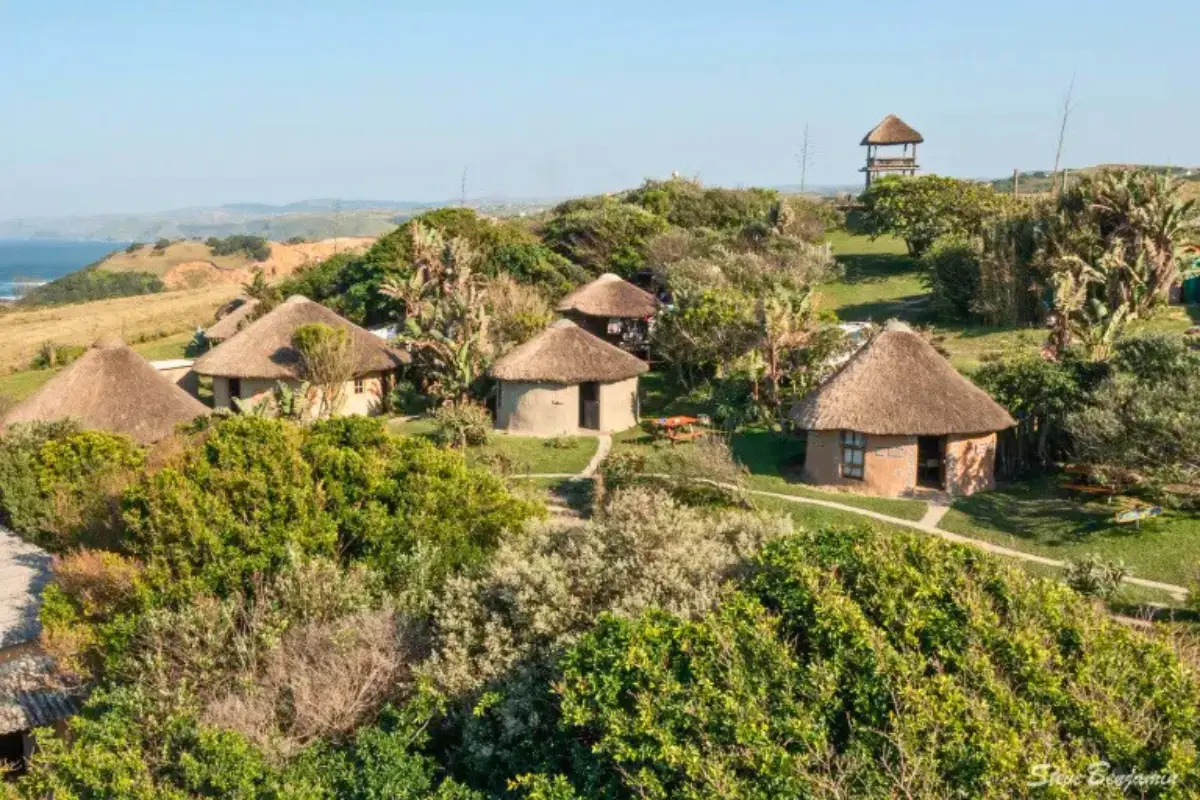
Thatched rondavel lodge accommodation at Mdumbi overlooking the Wild Coast ocean
On the other end of the spectrum, for those who like their adventures with a bit of grit and a lot of soul, Mdumbi is a gem. It’s further north along the Wild Coast, and the crew from Animal Ocean Expeditions has been running Sardine Run trips here for over a decade.
You’ll stay in simple Xhosa-style huts at Mdumbi Backpackers (aka Mdumbi Lodge), perched above one of the most beautiful stretches of coastline in the world. Expect a warm bed, hearty food, and conversation that runs late into the night. Days start early, out on the boat chasing bait balls, whales, and dolphins, and end with the kind of sunsets that make you forget your phone.
It’s not luxury, think adventure-rustic, but the experience is absolutely world-class. Many wildlife filmmakers and photographers have based their shoots here, and for good reason: Mdumbi’s waters are clean, rich, and alive.
Closer to Home: Mtentu’s Wild Heart
And then, of course, there’s Mtentu itself. We may not have the big lodge banners or flashy packages, but what we do have is authenticity. Near Skate Bay Beach, where the sand meets the sea, is one of the best spots on the coast to watch the sardine chaos unfold from dry land.
You can stay at The Hiking Shack, Mtentu Lodge, or the Mtentu Campsite (a community-run eco-lodge right near the Mtentu River mouth), or take a hike with Mtentu Ramble, my daughter Kelly’s trail. All offer a true Wild Coast experience, no crowds, no Wi-Fi arguments, just you, the ocean, and maybe a curious monkey or two.
Getting here is straightforward enough once you know the route, and it hasn't changed in years: how to get to Mtentu →. If you've read about the new N2 coastal road and the megabridges going up, that's real but years away, and it won't affect a 2027 trip: the current status of the N2 Wild Coast Road →
Tips for Experiencing the Sardine Run
- Timing is everything. The run usually peaks between mid-June and late July. Nature doesn’t keep a calendar, though, so flexibility is key.
- Bring your sense of adventure. Conditions can be unpredictable. It’s the Wild Coast, after all. One day you’ll have glassy seas and perfect light, the next you’re clinging to your hat in a salt-sprayed gale.
- Camera or not, just be present. The photos never quite capture the feeling of standing in the middle of so much life. Sometimes it’s enough just to watch.
- Support the locals. Whether you’re buying a fish braai from a beach vendor or booking a local guide, every rand helps preserve this coastline and its communities.
Reflections from the Shore
Every year when the sardine run rolls in, I’m reminded of why I stayed here in Mtentu all these years. Something is humbling about watching nature put on a show so extravagant, so chaotic, and yet so perfectly balanced.
Elena says I still get that same goofy grin every time I spot the first gannet dive. She’s probably right. And Amelia’s already planning her next bucket-wielding expedition, though I suspect she’s more interested in the dolphins than the sardines.
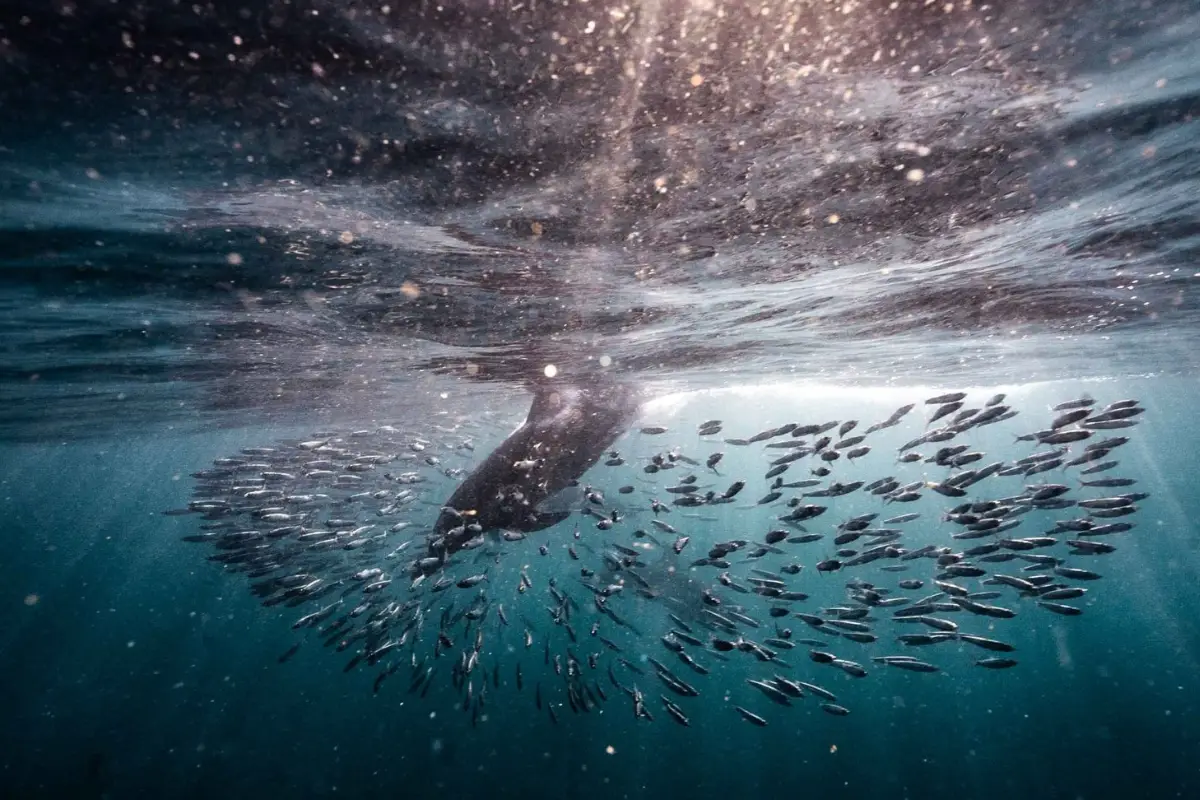
Underwater view of a gannet plunging through a dense silver sardine shoal during the Wild Coast sardine run
If you’re reading this from far, far away, like Shrek, maybe in a city where the loudest thing you hear is traffic, do yourself a favour: come and see this. Come and breathe this air, hear the ocean roar, and feel the ground shake when a billion tiny fish pass beneath your feet. Do not miss this spectacle.
The Wild Coast isn’t polished. It’s not predictable. But it’s real. And when the sea turns silver, and the sky fills with wings, you’ll understand why we call it magic-pure bucket list material.
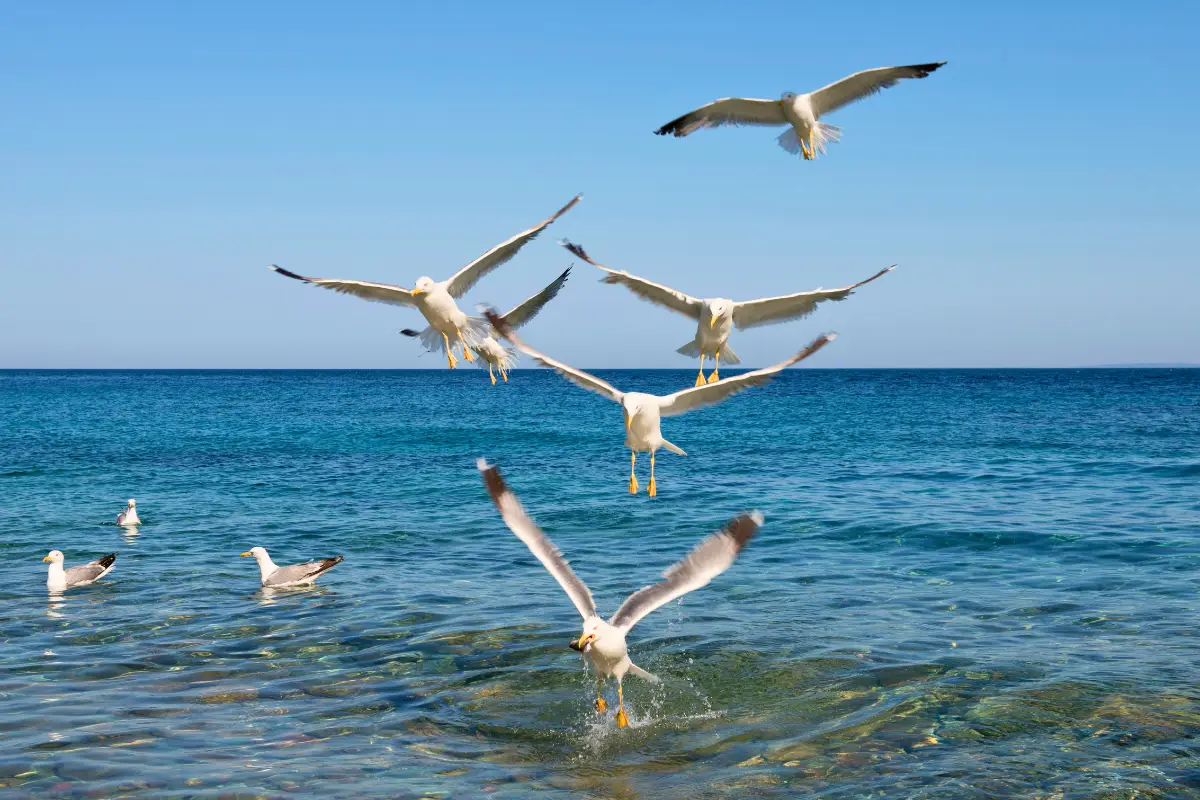
Seagulls swooping and diving into turquoise sea to feed during the sardine run on South Africa's Wild Coast
So pack a hat, a sense of wonder, and maybe a spare pair of socks, and we’ll see you down here next winter. The sardines are waiting.
FAQs
Where can you watch the sardine run near Mtentu?
From dry land near Skate Bay Beach, just below our house, which is one of the best spots on the coast to watch the sardine chaos unfold. You can also see it from a boat or, if you are particularly brave, from under the water itself.
Do you need to book in advance for the sardine run?
Yes. It is a yearly, winter-only spectacle and spots vanish fast, so aim to book by around October or November for the following winter. There are very few beds on this coast and the boat-based operators fill early. Miss one year and you wait until the next.
---
Ready to plan your own Wild Coast adventure?
Check out:
Some links in this article are affiliate links. If you book through them, we may earn a small commission at no extra cost to you. This helps support the Mtentu Ramble.
Ready to Experience This Yourself?
The Wild Coast is waiting. Book your guided hike with Mtentu Ramble and create memories that will last a lifetime.